What Is Solana Staking?
Solana staking involves entrusting your SOL tokens, which are digital currency, to a validator on the Solana network. A validator is a special participant that helps keep the Solana blockchain secure. When you stake your SOL, you help secure the network and can earn staking rewards, which are additional digital currency.
Unlike staking on some other networks, Solana staking does not require a minimum amount of SOL. This means that people with any amount of SOL can participate. You can stake your SOL using specific digital wallets like Phantom and Solflare, or through special services that let you use your staked SOL in other ways.
Disclaimer: This article is for informational purposes only and does not constitute financial advice. Always conduct your own research before making any financial decision.
How Does Solana Staking Work?
Solana staking works by letting you support the network's security using your SOL digital currency. It's like helping to maintain a shared record book and getting a thank you for it.
- You delegate your SOL tokens:
Delegate: To entrust your digital currency to another party, in this case, a validator.
- A validator uses your delegated SOL:
Validator: A computer on the Solana network that verifies transactions and adds new information to the blockchain. By delegating, you give the validator the ability to use your SOL to help confirm transactions and keep the network running smoothly. Your SOL remains yours, but it's used to support the validator's work.
- The validator helps secure the blockchain:
Blockchain: A secure, shared record of all transactions that happen on the Solana network. The validator's work helps ensure that the blockchain is accurate and secure. For their efforts, and the support from your delegated SOL, validators receive rewards from the network.
- You can earn staking rewards:
Staking rewards: Additional digital currency earned for participating in the staking process. Validators often share a portion of these rewards with the people who delegated SOL to them, as a thank you for their support.
Why Does Solana Staking Matter?
Solana staking is important because it directly helps keep the Solana network safe and operational. When you stake your SOL, you are contributing to the security of the blockchain, which is the fundamental technology behind the Solana network.
This process also offers a way for people who hold SOL to potentially earn staking rewards. By participating, you support the network's health while also having the chance to receive more digital currency in return for your contribution.
Key Terms You Should Know
Term | Plain-English Meaning |
|---|---|
SOL tokens | The digital currency of the Solana network. |
Validator | A computer or participant that helps secure the Solana network by verifying transactions. |
Blockchain | A secure, shared record of all transactions on a network. |
Staking rewards | Extra digital currency earned for helping to secure a network through staking. |
Delegate | To entrust your digital currency to a validator for staking. |
Hardware wallet | A physical device used to securely store your digital currency offline. |
Operational security | The practices and steps you take to keep your digital assets and personal information safe. |
Phishing attacks | Attempts to trick you into giving away sensitive information, often through fake websites. |
Common Misconceptions
- Staking is completely risk-free. Correction: While staking helps secure the network, there are always risks involved. For example, sending your digital currency to the wrong address could result in its loss. Always understand the risks and rewards.
- You need a lot of digital currency to stake Solana. Correction: Unlike some other staking options, Solana staking does not require a minimum amount of SOL. This makes it accessible to holders of any size.
- Once I stake, my digital currency is locked forever. Correction: The source does not explicitly state the locking period, but generally, staking involves some form of temporary commitment. Your SOL remains yours, but it is used by the validator during the staking period.
- All hardware wallets are perfectly secure, no matter what. Correction: While using a hardware wallet generally keeps your assets safe, you must still follow good operational security practices. This includes keeping your software and hardware updated and being careful about what you download.
Frequently Asked Questions
Is Solana staking safe?
Solana staking involves certain risks, just like any activity with digital currency. It's important to always balance the potential rewards with these risks. For example, moving tokens can be risky if you make a mistake with the address. To enhance safety, always check your operational security by securing your computer, using a hardware wallet, and keeping your software and hardware updated. Be very cautious of fake websites that mimic legitimate services.
Do I need a special amount to stake Solana?
No, you do not need a special minimum amount of SOL to stake. Solana staking is designed to be accessible to holders of any size, unlike some other digital currencies that require a large minimum stake.
How is Solana staking different from just holding Solana?
Simply holding Solana means you own the digital currency. Solana staking, on the other hand, means you are actively using your SOL to help secure the Solana network by delegating it to a validator. In return for this contribution, you can earn staking rewards.
Can anyone use Solana staking?
Yes, anyone with SOL digital currency can participate in Solana staking, as there is no minimum amount required. You can do this through compatible digital wallets or other staking services.
What are important security steps for staking?
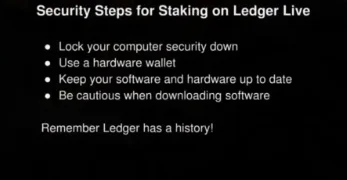
To keep your digital currency safe while staking, always follow these security steps:
- Lock down your computer's security settings.
- Use a hardware wallet to store your digital currency.
- Keep both your software and hardware up to date.
- Be very cautious when downloading any software, as phishing attacks often use fake websites to trick users.