What Is Solana Staking?
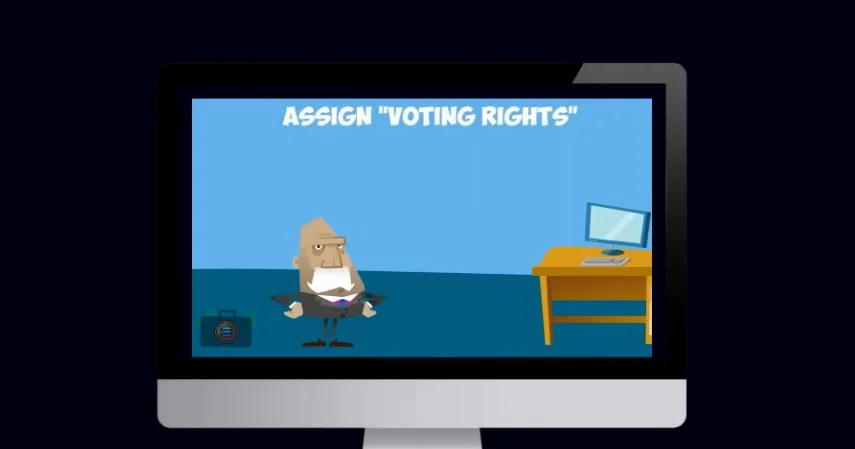
Solana staking is a process where you assign your voting rights for your SOL tokens to a special Solana computer called a validator. These validators play a crucial role in securing the Solana network.
Voting rights are simply the ability to vote on a transaction to determine if it is valid or invalid. Delegating means you are assigning these voting rights of your SOL to a validator.
Disclaimer: This article is for informational purposes only and does not constitute financial advice. Always conduct your own research before making any financial decision.
How Does Solana Staking Work?
Solana staking involves a straightforward process where you help secure the network and, in return, may receive rewards.
- You assign your voting rights for your SOL tokens to a chosen validator. This process is called delegating.
- The validator then uses these voting rights to vote on new transactions on the Solana network, which helps confirm their validity and secure the blockchain. A blockchain is a secure, shared record of transactions maintained by a network of computers.
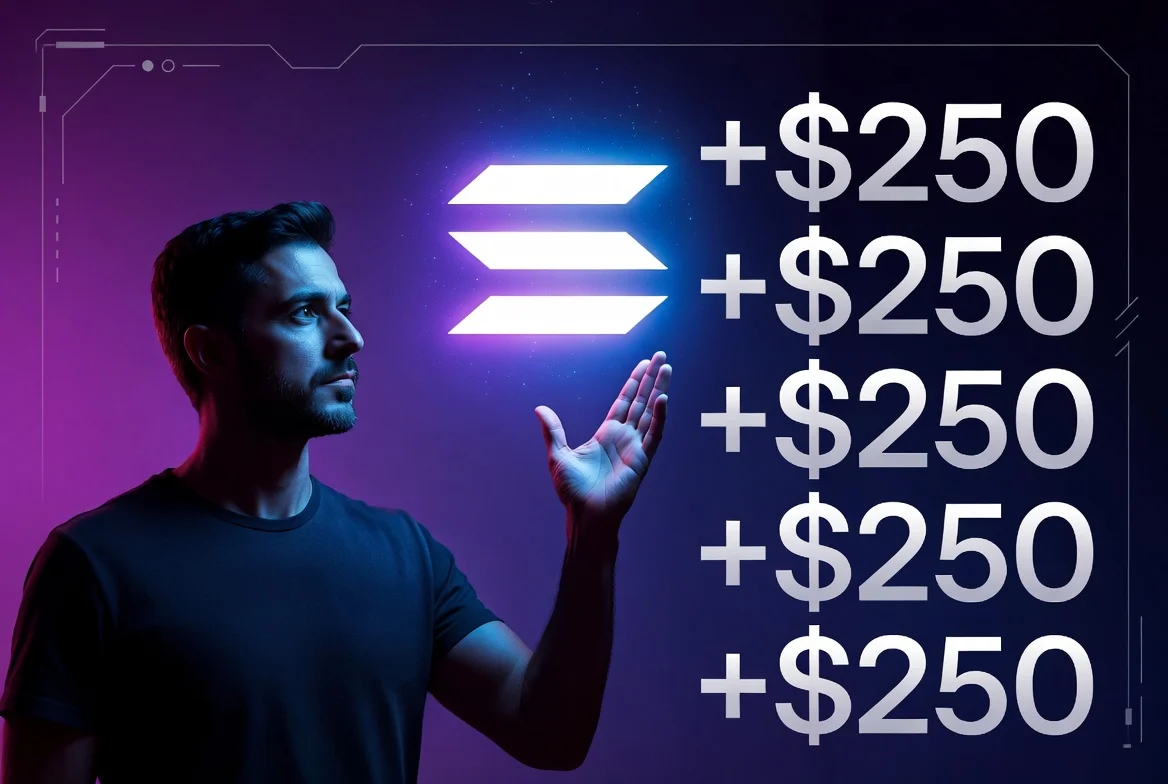
- Any rewards earned from your staked SOL are automatically added to your staking account. This happens at the end of every epoch, which is a period of approximately 2.5 days on the Solana network.
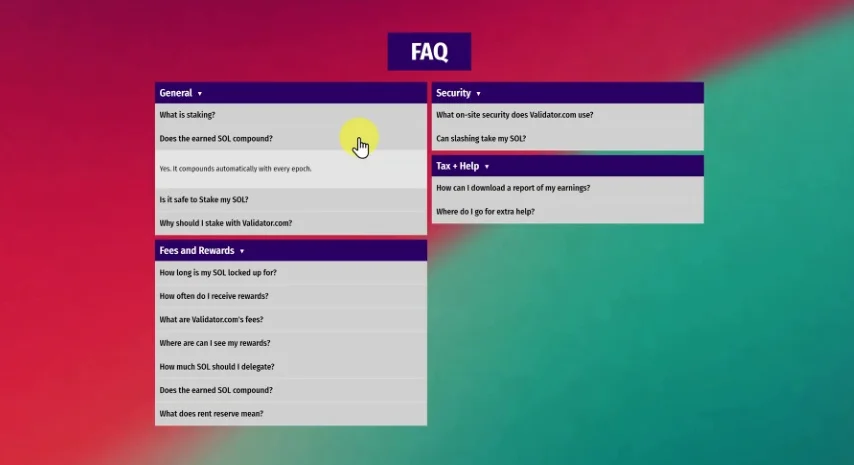
- When rewards are added, your total staked SOL increases, and these new tokens also begin to earn rewards. This continuous growth is known as compounding.
Why Does Solana Staking Matter?
Solana staking is important because it helps maintain the security and efficiency of the Solana network. By delegating your voting rights, you contribute to the process of verifying transactions.
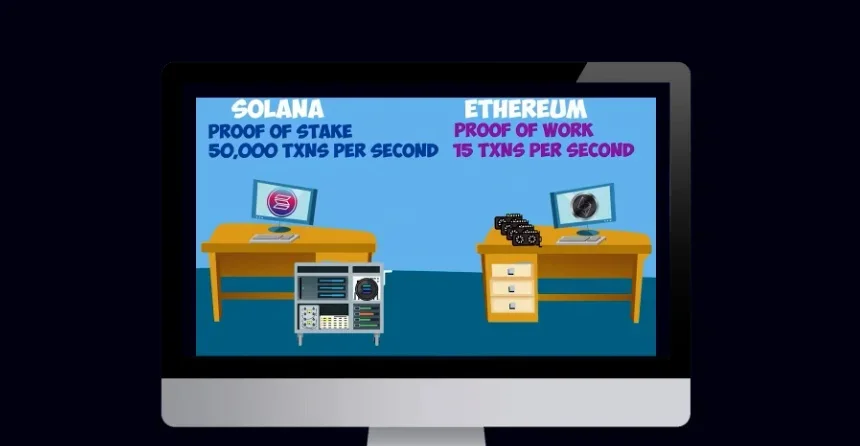
This collective effort allows the Solana network to process a high volume of transactions quickly. The Solana network is known for its speed, handling 50,000 transactions per second.
Without staking, the network would not be as secure or fast, as there would be fewer participants actively helping to validate transactions.
Key Terms You Should Know
Term | Plain-English Meaning |
|---|---|
Validator | A special Solana computer that helps secure the network by voting on transactions. |
Voting rights | The ability to vote on a transaction to determine if it is valid or invalid. |
Delegating | Assigning your voting rights for your SOL to a validator. |
Epoch | A period of approximately 2.5 days on the Solana network, after which staking rewards are automatically added. |
Blockchain | A secure, shared record of transactions maintained by a network of computers. |
Common Misconceptions
- Validators can take your SOL.Correction: Validators cannot take your SOL. You can always withdraw your staked SOL from a validator at any time.
- If a validator goes offline, your staked SOL is stuck.Correction: Even if a validator turns off their computer, you can still withdraw your SOL. Only the voting rights assigned to them are affected.
Solana Staking vs Ethereum Staking
Solana Staking | Ethereum Staking | |
|---|---|---|
Minimum Stake | No minimum stake amount | May require a minimum stake amount |
Transaction Speed | 50,000 transactions per second | 15 transactions per second |
Frequently Asked Questions
Is Solana staking safe?
Yes, Solana staking is considered safe. The Solana software has been audited by a leading cybersecurity firm, Kudelski. Validators cannot take your SOL; they only have your voting rights, which you can withdraw at any stage.
Do I need a lot of SOL to stake?
No, Solana staking does not require a minimum stake amount. This makes it accessible to holders of any size, allowing many people to participate in securing the network.
How is Solana staking different from Ethereum staking?
Solana staking does not require a minimum stake amount, unlike Ethereum, which may have such requirements. Additionally, the Solana network is significantly faster, processing 50,000 transactions per second compared to Ethereum's 15 transactions per second.
Can anyone use Solana staking?
Yes, Solana staking is accessible to anyone. Since there is no minimum stake amount, holders of any amount of SOL can delegate their voting rights to a validator and participate in the network's security.
What happens if a validator goes offline?
If a validator turns off their machine, you can still withdraw your SOL. The validator cannot access your tokens; only the voting rights you delegated to them are affected.
Do staking rewards automatically grow?
Yes, any earned SOL rewards compound automatically with every epoch. This means the rewards are added to your staked amount, and then that larger amount begins to earn further rewards.