Cryptocurrency terms can often be confusing, especially for newcomers. Two common ways people engage with crypto are staking and yield farming. While they both involve using your crypto assets, they serve different purposes and have distinct characteristics.
Disclaimer: This article is for informational purposes only and does not constitute financial advice. Always conduct your own research before making any financial decision.
What Is Staking?
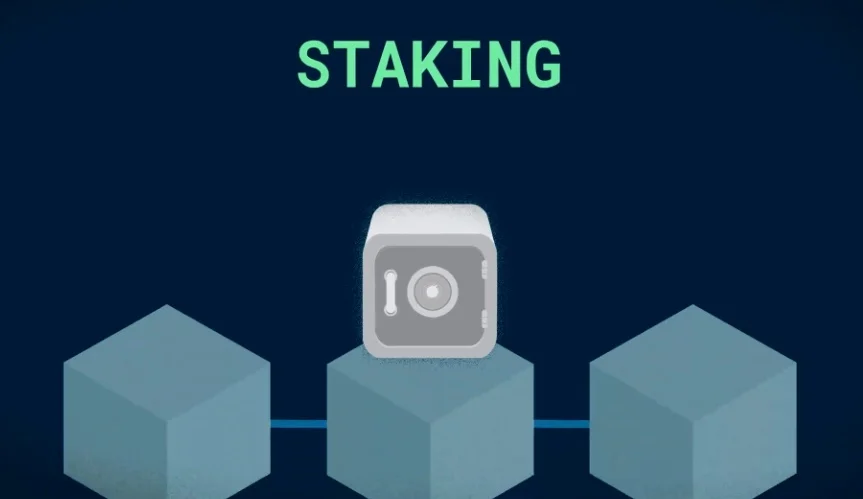
Staking is a way to participate in a proof-of-stake blockchain security system by locking up a crypto asset. When you stake, you are essentially committing your digital money to help secure a network. In return for this participation, you can receive rewards.
proof-of-stake blockchain: a type of digital ledger system that secures its network by asking users to "lock up" their crypto assets
crypto asset: a digital asset, like a digital currency, that uses cryptography for security
network: a system of connected computers that share information
How Does Staking Work?
When you stake, you lock up your crypto assets to become part of the blockchain's security system. This helps to make the network stronger and more decentralized. The locked assets help verify transactions and maintain the integrity of the blockchain.
For your contribution to the network's security, you are given rewards. These rewards are typically paid in the same type of crypto asset that you staked.
Why Does Staking Matter?
Staking is important because it helps secure and strengthen proof-of-stake blockchains. By locking up assets, many participants contribute to the network's stability. This process helps to keep the digital ledger safe and reliable.
Without staking, these types of blockchains would be less secure. It allows the network to operate without a central authority controlling everything.
What Is Yield Farming?
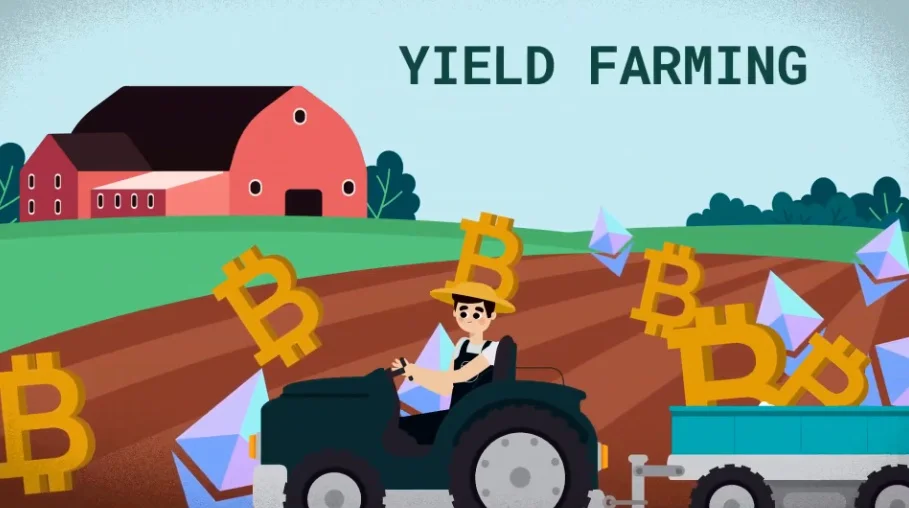
Yield farming describes the act of people trying to maximize their returns (yield) in decentralized finance (DeFi). It involves putting crypto assets to work on different protocols to earn more crypto. This is like planting seeds in various fields to grow a bigger harvest.
yield farming: the act of investors trying to maximize their returns, or yield, in decentralized finance by putting their assets to work on different protocols
returns (yield): the profit or income generated from an investment
decentralized finance (DeFi): financial services offered through blockchain technology without traditional banks
protocols: a set of rules that computers follow to communicate or perform tasks
How Does Yield Farming Work?
Yield farmers typically deposit their crypto assets into liquidity pools of DeFi protocols. These pools enable the protocols to offer various services to other users. These services can include lending, borrowing, swapping, or leveraged trading.
liquidity pools: collections of crypto assets locked in smart contracts, used to facilitate trading and lending
lending: allowing someone to use your crypto assets in exchange for interest
borrowing: taking a loan of crypto assets, usually by paying interest
swapping: exchanging one crypto asset for another
leveraged trading: using borrowed funds to increase potential returns from trades
In return for providing these services, yield farmers are rewarded. These rewards often come from a portion of the platform's fees or interest paid by borrowers.
Why Does Yield Farming Matter?
Yield farming matters because it allows people to maximize their returns within the decentralized finance ecosystem. By actively participating in different protocols, users can earn additional crypto assets. It creates a way for crypto holders to generate income from their digital assets.
Key Terms You Should Know
Term | Plain-English Meaning |
|---|---|
Staking | Locking up a crypto asset to participate in a proof-of-stake blockchain security system, in exchange for rewards. |
Crypto asset | A digital asset, like a digital currency, that uses cryptography for security. |
Proof-of-stake blockchain | A type of digital ledger system that secures its network by asking users to "lock up" their crypto assets. |
Network | A system of connected computers that share information. |
Yield farming | The act of investors trying to maximize their returns, or yield, in decentralized finance by putting their assets to work on different protocols. |
Returns (yield) | The profit or income generated from an investment. |
Decentralized finance (DeFi) | Financial services offered through blockchain technology without traditional banks. |
Protocols | A set of rules that computers follow to communicate or perform tasks. |
Liquidity pools | Collections of crypto assets locked in smart contracts, used to facilitate trading and lending. |
Lending | Allowing someone to use your crypto assets in exchange for interest. |
Borrowing | Taking a loan of crypto assets, usually by paying interest. |
Swapping | Exchanging one crypto asset for another. |
Leveraged trading | Using borrowed funds to increase potential returns from trades. |
Validators | Participants who verify transactions and maintain the blockchain. |
Slashing | A penalty imposed on validators for misbehavior or errors on a proof-of-stake blockchain. |
Impermanent loss | A temporary unrealized loss of funds due to price changes in a liquidity pool. |
Smart contract bugs | Errors or vulnerabilities in the code of automated agreements on a blockchain. |
Exploits | Taking advantage of weaknesses in a system to gain unauthorized access or benefit. |
Common Misconceptions
- Misconception: Staking and yield farming are 100% safe.Correction: Both staking and yield farming involve different levels of risk. They are not entirely risk-free ways to earn rewards.
Staking vs Yield Farming
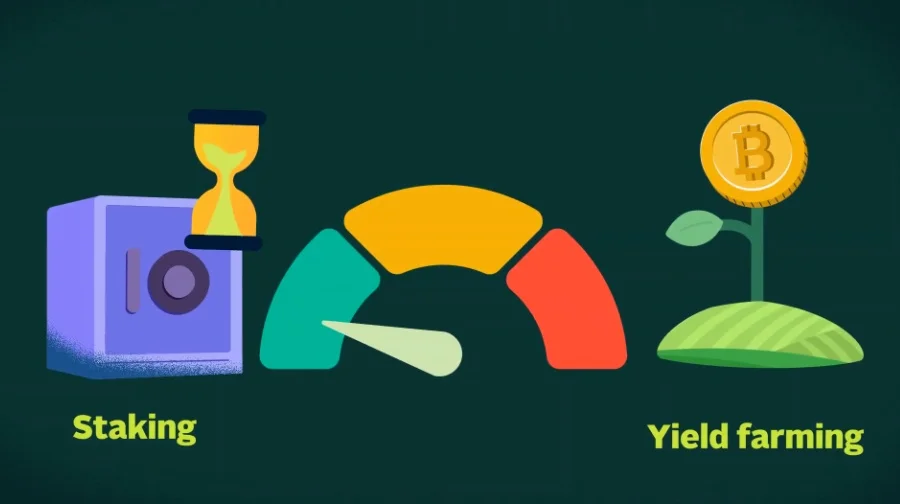
While both staking and yield farming involve using crypto assets to potentially earn rewards, they have key differences in their purpose, risks, and how assets are handled.
Staking | Yield Farming | |
|---|---|---|
Primary Purpose | Securing a proof-of-stake blockchain network. | Maximizing returns on crypto assets through various DeFi activities. |
Typical Returns | Generally more conservative, often with annual percentages in the single digits. | Can offer higher yields, but typically with higher risk. |
Withdrawal | Usually has an unstaking period that can last a few days or weeks before assets are available. | Typically allows for instant withdrawals of deposited tokens. |
Key Risks | Slashing (penalties for network errors or malicious activity by validators), potential financial losses during the unlocking period. | Impermanent loss, smart contract bugs, exploits, rug pulls, and other scams. |
unstaking period: the time required for locked crypto assets to become available for withdrawal after you decide to stop staking them
validators: participants who verify transactions and maintain the blockchain
Frequently Asked Questions
Is staking safe?
Staking is generally considered safer than yield farming, but it still comes with risks. These risks include slashing, which can penalize participants for errors or malicious actions. There's also the risk of financial losses if the market price of your crypto asset drops during the unstaking period, when you cannot sell it.
Is yield farming safe?
Yield farming exposes users to higher risks compared to staking. These risks include impermanent loss, where the value of your assets changes while they are in a liquidity pool. It also involves risks from smart contract bugs and exploits, which are vulnerabilities that can lead to losses.
How is staking different from yield farming?
Staking's primary goal is to help secure a blockchain network, while yield farming aims to maximize returns by using assets in various decentralized finance protocols. Staking typically involves an unstaking period, whereas yield farming often allows for instant withdrawals. Additionally, yield farming generally carries higher risks and potentially higher rewards than staking.
Can anyone stake?
Yes, if you own a crypto asset that is used on a proof-of-stake blockchain, you can typically participate in staking. You would need to use a platform or wallet that supports staking for that specific crypto asset and network. There are usually no minimum requirements for general staking, making it accessible to many.