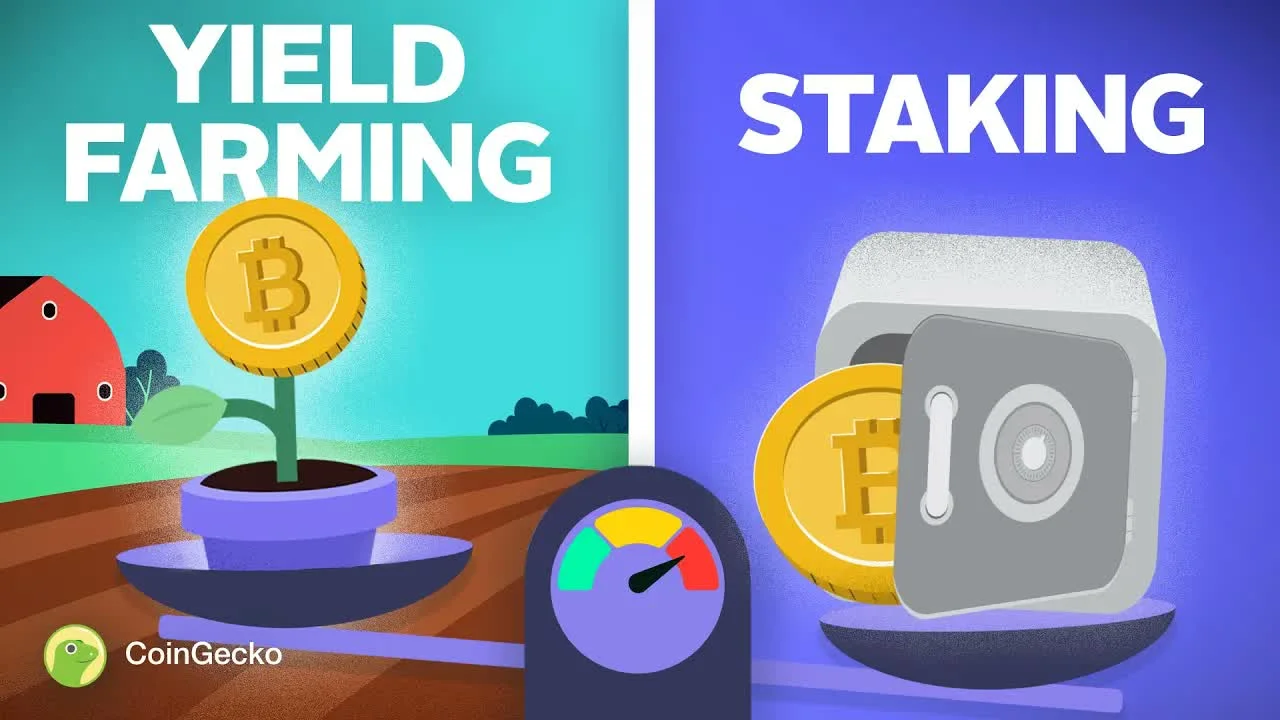
What Is Bitcoin Staking?
Bitcoin is a type of cryptocurrency, which is a digital form of money or asset secured by cryptography. Unlike many other cryptocurrencies, Bitcoin does not natively support staking.
Staking is a process where you lock up your crypto to help secure a Proof of Stake network. In exchange for this, the network gives you rewards, usually in the form of newly created tokens.
Bitcoin operates using a different method called Proof of Work. This design choice means that Bitcoin relies on mining to secure its network, rather than users locking up their Bitcoin.
Disclaimer: This article is for informational purposes only and does not constitute financial advice. Always conduct your own research before making any financial decision.
How Does Bitcoin Staking Work?
Bitcoin cannot be staked in its original form because it uses Proof of Work.
Proof of Work: a method for securing a cryptocurrency network that relies on computers solving complex puzzles (mining).
Other cryptocurrencies use Proof of Stake to secure their networks.
Proof of Stake: a method for securing a cryptocurrency network that relies on users locking up their crypto to participate.
However, some third-party solutions have emerged that allow Bitcoin holders to use their Bitcoin to support other networks or protocols. These methods typically involve locking your Bitcoin to earn a yield on a different blockchain or platform.
network: a system of connected computers that share information and resources. protocol: a set of rules that governs how data is transmitted and received between computers. yield: the returns or interest earned on a financial asset.
These third-party solutions can include wrapped Bitcoin solutions or cross-chain staking protocols. Such solutions enable Bitcoin to be used as a form of security for Proof of Stake chains, even though Bitcoin itself remains a Proof of Work network.
wrapped Bitcoin solutions: a way to use Bitcoin on other blockchain networks by creating a new token that represents the locked Bitcoin. cross-chain staking protocols: systems that allow Bitcoin to be locked on one blockchain to secure another separate blockchain.
What is often called "Bitcoin staking" is actually lending your Bitcoin to a platform. In this case, you deposit your Bitcoin, and the platform then lends it out to others to generate interest.
lending: depositing your cryptocurrency with a platform that then loans it out to others, usually for interest.
Why Does Bitcoin Staking Matter?
Understanding how "Bitcoin staking" actually works is important because it involves different risks and different purposes compared to native Bitcoin use.
When platforms offer yield on Bitcoin, it often involves lending your Bitcoin. This means you hand over control of your Bitcoin to a third party. This can expose your funds to risks that you might not fully understand.
For cryptocurrencies that truly use Proof of Stake, rewards for staking often come from new token inflation. This means new tokens are created to pay stakers, which can reduce the value of existing tokens over time unless demand keeps up.
token: a unit of value on a blockchain, similar to a digital coin. inflation: an increase in the supply of something, which can reduce the value of each individual unit.
Bitcoin's original purpose focuses on personal control, long-term preservation, and sovereignty. Allowing third parties to manage your Bitcoin for potential yield can go against these core principles and introduce unnecessary risk.
Key Terms You Should Know
Term | Plain-English Meaning |
|---|---|
Bitcoin | A digital form of money or asset secured by cryptography. |
Cryptocurrency | A digital form of money or asset secured by cryptography. |
Staking | Locking up your crypto to help secure a Proof of Stake network, in exchange for rewards. |
Crypto | A short term for cryptocurrency. |
Proof of Stake | A method for securing a cryptocurrency network that relies on users locking up their crypto to participate. |
Proof of Work | A method for securing a cryptocurrency network that relies on computers solving complex puzzles (mining). |
Network | A system of connected computers that share information and resources. |
Protocol | A set of rules that governs how data is transmitted and received between computers. |
Yield | The returns or interest earned on a financial asset. |
Wrapped Bitcoin Solutions | A way to use Bitcoin on other blockchain networks by creating a new token that represents the locked Bitcoin. |
Cross-chain Staking Protocols | Systems that allow Bitcoin to be locked on one blockchain to secure another separate blockchain. |
Lending | Depositing your cryptocurrency with a platform that then loans it out to others, usually for interest. |
Token | A unit of value on a blockchain, similar to a digital coin. |
Inflation | An increase in the supply of something, which can reduce the value of each individual unit. |
Sovereignty | The power to govern oneself without outside interference. |
Counterparty Risk | The risk that the other side of a financial agreement will not fulfill their obligations. |
Common Misconceptions
- You can natively stake Bitcoin. Correction: Bitcoin does not use Proof of Stake; it uses Proof of Work. Therefore, you cannot natively stake Bitcoin in the same way you would stake cryptocurrencies designed for Proof of Stake networks.
- Earning yield on Bitcoin is always staking. Correction: When you deposit Bitcoin on a platform to earn yield, you are typically lending your Bitcoin to that platform. This is different from actual staking.
- Staking is passive income without risk. Correction: Staking often creates the illusion of income while inflation can reduce real returns. When lending Bitcoin for yield, you are taking on risk by giving up control of your funds.
- "Risk-free" Bitcoin staking exists. Correction: Phrases like "risk-free" when associated with earning yield on Bitcoin are often red flags. If you don't hold the keys to your Bitcoin, you are exposed to counterparty risk.

Bitcoin vs Lending
Bitcoin (Native Use) | Lending Bitcoin | |
|---|---|---|
Mechanism | Secured by Proof of Work (mining) | Relies on third-party platforms to manage funds |
Control | You maintain direct control of your Bitcoin (if you hold the keys) | You hand over control of your Bitcoin to a platform |
Purpose | Designed for personal control, long-term preservation, and sovereignty | Aims to generate yield (interest) on your Bitcoin |
Risk | Involves market risk of price fluctuations | Involves market risk plus platform-specific risks like collapse or mismanagement (counterparty risk) |
When you deposit Bitcoin onto a platform to earn interest, you are giving your Bitcoin to someone else. This third party then lends it out or uses it in other strategies that expose your funds to risk.
This process is distinct from actual staking, which directly secures a Proof of Stake network. When you lend, you are taking on risk without always realizing it, and you give up your direct control.
counterparty risk: the risk that the other side of a financial agreement will not fulfill their obligations.

Frequently Asked Questions
Is Bitcoin staking safe?
Native Bitcoin staking is not possible. When you see offers to "stake" Bitcoin, it usually refers to lending it. Lending Bitcoin to a platform involves significant risk, including the possibility that the platform could mismanage funds or collapse, leading to potential loss of your Bitcoin.
Do I need Bitcoin staking to use crypto?
No, you do not. Bitcoin's core design emphasizes personal control and long-term preservation, not earning yield through staking. You can own and use Bitcoin without engaging in any staking or lending activities.
How is Bitcoin staking different from regular staking?
True staking involves locking crypto to secure a Proof of Stake network. Bitcoin does not use Proof of Stake; it uses Proof of Work. Therefore, "Bitcoin staking" refers to using third-party services that enable lending or other arrangements, which are different from direct network security participation.
Can anyone use Bitcoin staking?
Native Bitcoin staking is not possible. While various third-party protocols allow Bitcoin to be used in ways that resemble staking, these often involve lending your Bitcoin and transferring control to others. Anyone can potentially access these third-party services, but it's crucial to understand the inherent risks.
Where do staking rewards come from?
For true Proof of Stake networks, staking rewards often come from newly created tokens, which can cause inflation. For platforms offering yield on Bitcoin, the returns usually come from the platform lending out your Bitcoin or using it in other investment strategies, which introduces additional risk.