What Is Solana?
Solana is a specialized type of digital network, known as a blockchain, designed to process digital transactions incredibly fast and with very low costs. You can think of Solana as a super-fast digital highway built specifically for various online activities, from sending money to running complex programs.
It is a Layer 1 blockchain, meaning it's a fundamental, independent network that doesn't rely on another blockchain to operate. Solana supports smart contracts, which are like automatic programs that run without needing any person or company in the middle. These smart contracts allow for decentralized apps (dApps), which are applications that run on the blockchain network itself rather than a single company's servers.
The network has its own digital currency called SOL. This coin is used for paying small fees when you make transactions on the network and also helps secure the network through a process called staking.
Disclaimer: This article is for informational purposes only and does not constitute financial advice. Always conduct your own research before making any financial decision.
How Does Solana Work?
Solana achieves its speed and low costs through a unique combination of technologies, particularly its consensus mechanism. A consensus mechanism is the system blockchains use to agree that transactions are valid and should be added to the network's record.
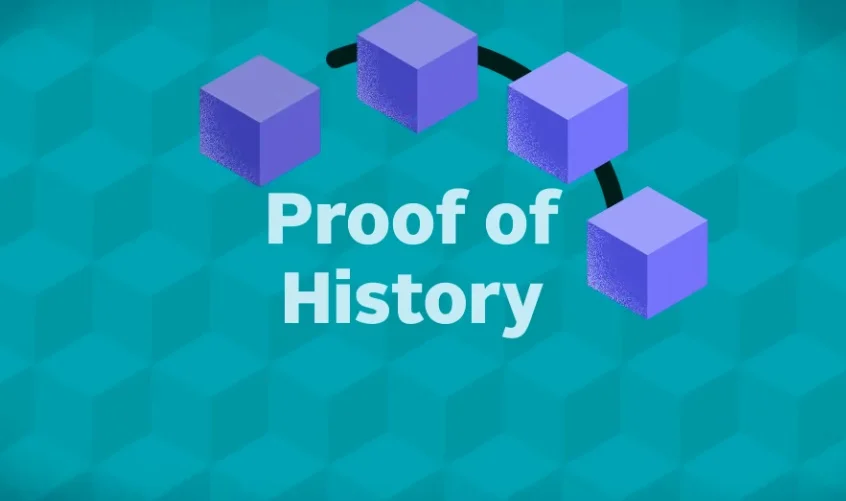
Solana combines two main approaches: Proof of Stake and Proof of History. Here's how they work together:
- Proof of Stake: Like some other blockchains, Solana uses Proof of Stake. In this system, people who own and "lock up" their SOL coins on the network are chosen to help verify transactions. The more SOL they stake, the more likely they are to be chosen.
Proof of Stake: A consensus mechanism where parties with more of the network's coin locked up are more likely to be chosen to validate transactions.
- Proof of History: This is where Solana is truly unique. Imagine a very secure, verifiable clock that timestamps every event and transaction in order. Proof of History creates a historical record of events that proves the order and timing of transactions, making it much faster for the network to agree on what happened and when.
Proof of History: A unique Solana consensus mechanism that creates a secure clock and a historical record of events, making transaction processing fast.
- Parallel Processing: Solana also uses parallel processing, which means it can verify many different transactions at the same time, rather than one after another. This is like having many cashiers open at a store instead of just one.
Parallel processing: A method allowing multiple transactions to be verified at the same time.
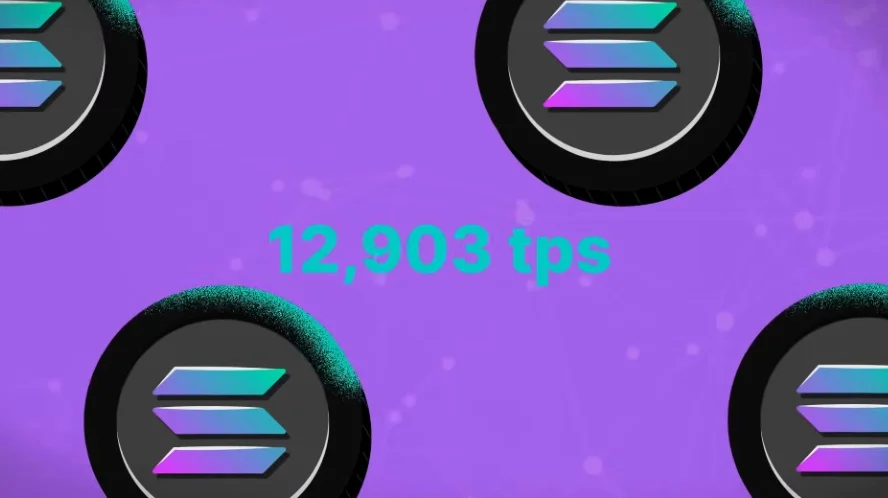
Because of these innovations, Solana can handle a massive number of transactions very quickly, up to 65,000 transactions per second. This speed allows users to pay very small fees for their activities on the network, which is why does Solana matter for mainstream adoption.
Why Does Solana Matter?
Solana matters because it directly addresses common problems faced by earlier blockchain networks: slow transaction speeds and high costs. When comparing Solana vs. Other Blockchains, it becomes clear how these innovations allow for efficient, scalable operations in the early days of these technologies, where many networks became congested as they grew popular, leading to delays and expensive fees for users.
By offering extremely fast and inexpensive transactions, Solana makes it practical for people to use a wide variety of decentralized apps (dApps) every day. It allows for a vibrant ecosystem where many different digital projects and applications can operate efficiently. Without solutions like Solana, many innovative applications that require quick and cheap interactions might not be possible.
Key Terms You Should Know
Term | Plain-English Meaning |
|---|---|
Blockchain | A digital, secure, and shared record book that is nearly impossible to change. |
Layer 1 blockchain | A foundational, independent blockchain network. |
Smart contracts | Programs that run automatically without needing any middlemen. |
Decentralized apps (dApps) | Applications that run on a blockchain network. |
SOL | Solana's native network coin, used for transaction fees and network security. |
Staking | The act of locking up cryptocurrency to help secure a network and earn rewards. |
Consensus mechanism | The system used to agree on the validity of transactions on a blockchain. |
Proof of Stake | A consensus mechanism where parties with more of the network's coin locked up are more likely to be chosen to validate transactions. |
Proof of History | A unique Solana consensus mechanism that creates a secure clock and a historical record of events, making transaction processing fast. |
Parallel processing | A method allowing multiple transactions to be verified at the same time. |
Ecosystem | The collection of projects, applications, and communities built on a blockchain network. |
Common Misconceptions
- Solana is less decentralized than other major blockchains. While a particular metric like validator count (Solana has 1,400 compared to Ethereum's over 1 million) might suggest this, decentralization can be measured in many ways. It is a complex and frequently discussed topic, and both networks are continually developing and can become more decentralized over time.
Solana vs Ethereum
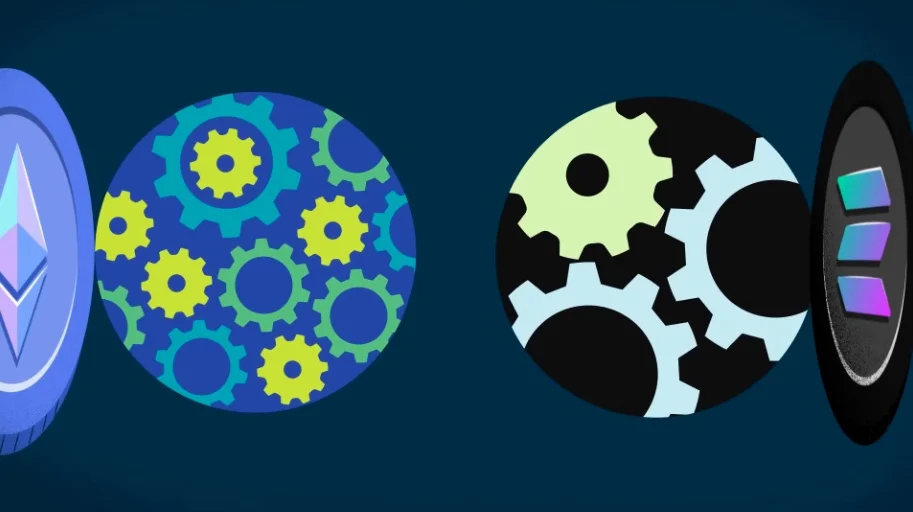
Both Solana and Ethereum are major Layer 1 blockchains that support smart contracts and decentralized apps. However, they have key differences in how they operate and their capabilities.
Solana | Ethereum | |
|---|---|---|
Launch Year | 2017 (Mainnet 2020) | 2015 |
Transaction Speed | Up to 65,000 transactions per second | 13-15 transactions per second |
Transaction Costs | Generally minimal fees | Can rise significantly when busy |
Consensus Mechanism | Proof of History combined with Proof of Stake | Proof of Stake |
Scaling | Achieved through unique architecture (e.g., Proof of History, parallel processing) | Uses Layer 2 solutions (separate blockchains built on top) like Optimism and Arbitrum for faster, lower-cost transactions. |
> Layer 2 solutions: Separate blockchains built on top of a main blockchain to process transactions faster and at lower costs. | ||
Native Coin | SOL | ETH |
Validators | Around 1,400 | Over 1 million |
Frequently Asked Questions
Is Solana safe?
Solana, like other blockchain networks, is designed with security in mind through its consensus mechanism and decentralized nature. However, all digital technologies have risks. It's always important to understand how any technology works and to be careful with your digital assets.
Do I need SOL to use crypto on Solana?
Yes, if you want to perform actions or use decentralized apps (dApps) on the Solana network, you will need SOL. A small amount of SOL is typically required to pay for the transaction fees to process your activities on the network.
How is Solana different from Ethereum?
Solana differs from Ethereum mainly in its approach to speed and cost. Solana uses its unique Proof of History and parallel processing to handle many more transactions per second at much lower fees. Ethereum processes fewer transactions per second and uses Layer 2 solutions to help with its speed and cost challenges. Both are Layer 1 blockchains that support smart contracts and decentralized apps.
Can anyone use Solana?
Yes, Solana is a public blockchain network, meaning anyone with an internet connection can access it and use its services. You don't need special permission to join or use decentralized apps (dApps) built on Solana.
Why are Solana transactions so fast and cheap?
Solana achieves its speed and low costs primarily through its innovative Proof of History consensus mechanism and its ability to use parallel processing. These technologies allow the network to process thousands of transactions simultaneously and verify their order very efficiently, reducing the time and computational effort required for each transaction.