If you've ever wondered how Bitcoin actually moves from one wallet to another: Before exploring the potential impact of quantum computers on blockchain technology, it's helpful to understand what quantum computers are and how they differ from the traditional computers we use every day. Imagine a fundamental unit of information, like a light switch that can only be either on or off. That's similar to how a traditional classical computer works.
Disclaimer: This article is for informational purposes only and does not constitute financial advice. Always conduct your own research before making any financial decision.
What Are Quantum Computers?
Classical computers process information using bits, which are like those light switches, representing either a one or a zero at any given moment. A quantum computer, however, uses quantum bits, or qubits. Unlike a bit, a qubit can represent both one and zero simultaneously.
This unique ability for a qubit to exist in multiple states at once is known as quantum superposition. Think of it like a coin spinning in the air: while it's spinning, it's neither heads nor tails, but a combination of both possibilities until it lands. This fundamental difference allows quantum computers to process information in ways that classical computers cannot. 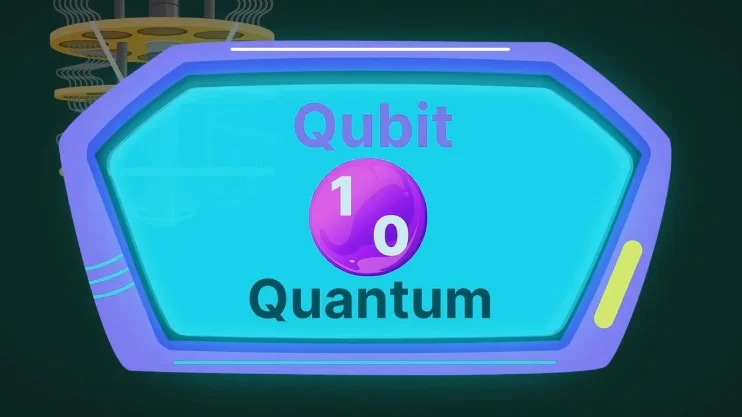
How Do Quantum Computers Work?
The core idea of quantum computers involves using qubits to perform calculations. Because qubits can hold multiple states at once through quantum superposition, they can explore many possibilities simultaneously, making them incredibly powerful for certain types of problems.
However, building these advanced machines comes with significant challenges. The raw, fundamental units of quantum information are called physical qubits. These physical qubits are extremely unstable and are prone to introducing errors into calculations. To overcome this instability and ensure reliable computation, scientists combine many physical qubits to create a more stable and accurate unit called a logical qubit. 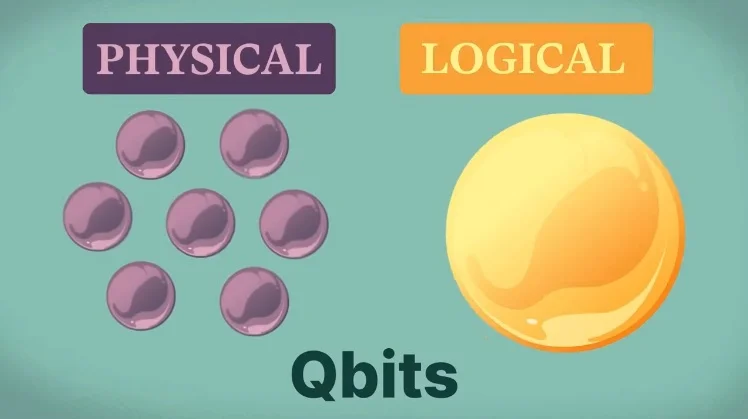
A single logical qubit can consist of numerous physical qubits working together to correct any errors that might occur. This error correction process is crucial for quantum computers to function effectively and provide accurate results.
Why Do Quantum Computers Matter?
Quantum computers matter because their unique ability to process vast amounts of information simultaneously gives them immense computational power. For example, 500 qubits can significantly outperform 2 to the power of 500 classical bits, indicating their potential for solving problems currently impossible for even the most powerful traditional supercomputers. 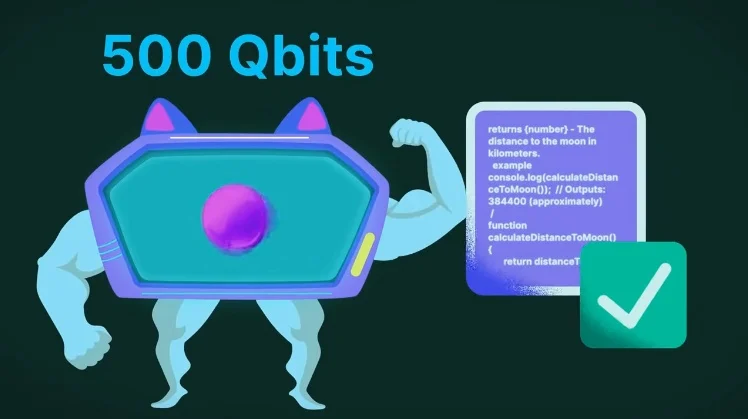
One significant area where this power could have a profound impact is cryptography, which is the science of secure communication that protects our digital information. Many current encryption methods, including those used to secure cryptocurrencies like Bitcoin, rely on the difficulty for classical computers to solve certain mathematical problems. A specific quantum algorithm, known as Shor's algorithm, could potentially compromise the encryption shielding Bitcoin and other digital systems.
Updating the encryption of a blockchain, which is a distributed ledger technology, is an incredibly difficult and complex task. It would require convincing every node – a computer that maintains and processes information within a blockchain network – in the entire network to switch to a new encryption standard. This highlights the importance of understanding quantum computing's potential long-term implications for digital security. 
Key Terms You Should Know
Term | Plain-English Meaning |
|---|---|
Bits | The basic units of information in classical computing, representing either a 0 or a 1. |
Classical Computer | A traditional computer that processes information using bits. |
Qubits | Quantum bits that can represent both a 0 and a 1 simultaneously. |
Quantum Computer | A new type of computer that uses qubits to process information in unique ways. |
Quantum Superposition | The ability of a qubit to exist in multiple states (both 0 and 1) at the same time. |
Physical Qubits | The raw, unstable quantum bits that are prone to errors. |
Logical Qubits | Stable, error-corrected qubits created by combining numerous physical qubits for reliable computation. |
Shor's Algorithm | A specific quantum algorithm that could potentially compromise the encryption methods used by systems like Bitcoin. |
Blockchain | A decentralized, distributed ledger that records transactions across many computers. |
Node | A computer that participates in a blockchain network by maintaining a copy of the ledger and validating transactions. |
Quantum Computers vs Classical Computers
Quantum Computers | Classical Computers | |
|---|---|---|
Basic Unit of Information | Qubits | Bits |
Information Representation | Both 0 and 1 simultaneously (superposition) | Either 0 or 1 |
Computational Power | Can solve certain complex problems much faster | Solve problems sequentially |
Frequently Asked Questions
Can quantum computers break current encryption?
Yes, a specific quantum algorithm called Shor's algorithm has the potential to compromise some of the encryption methods widely used today, including those that secure cryptocurrencies like Bitcoin.
Is Bitcoin's encryption at risk from quantum computers?
Potentially, yes. The encryption used by Bitcoin could be vulnerable to quantum algorithms like Shor's algorithm in the future, which could impact its security.
How difficult is it to update blockchain encryption?
Updating the encryption of a blockchain is a very difficult process. It requires all nodes, which are the individual computers participating in the network, to agree and switch to a new encryption standard.
What makes quantum computers so powerful?
Quantum computers gain their power from qubits and the concept of quantum superposition. This allows them to explore many possible solutions to a problem at the same time, giving them a significant advantage for certain complex calculations compared to classical computers.