Imagine you have digital money, called cryptocurrency, that lives online. Just like physical cash, you need a safe place to store it. This is where a hardware wallet comes in. It helps you keep your digital money secure and under your control.
Disclaimer: This article is for informational purposes only and does not constitute financial advice. Always conduct your own research before making any financial decision.
What Is a Hardware Wallet?
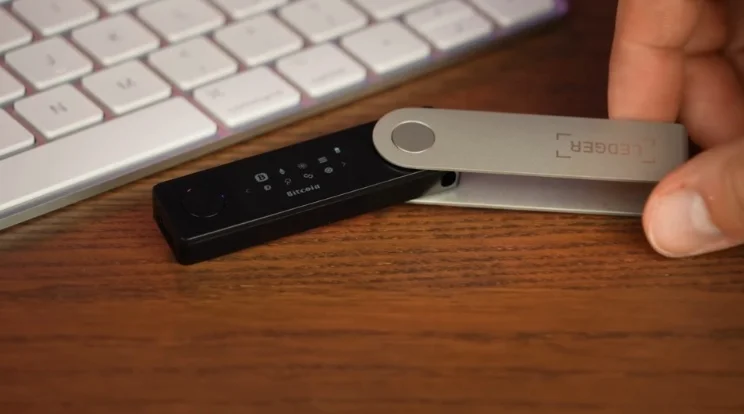
A hardware wallet is a small physical device that helps keep your cryptocurrency safe, and how Ledger devices secure digital assets is a great example of this protection. It does this by storing special secret codes, known as private keys, completely offline.
Think of it like a highly secure digital safe for your digital money. Instead of money, it holds the keys that prove you own your cryptocurrency.
Cryptocurrency: Digital money that uses secure online technology.
Private Key: A secret code that proves you own your digital money.
How Does a Hardware Wallet Work?
A hardware wallet has a special secure area inside, like a tiny, protected computer, called a secure element chip. This chip is designed to keep your private keys isolated and safe.
Secure Element Chip: A small, highly protected computer chip inside a hardware wallet that stores sensitive information like private keys.
When you first set up a hardware wallet, it usually gives you a seed phrase, which is a list of 12 to 24 random words. This seed phrase is like the master key to all your digital money.
Seed Phrase: A sequence of 12 to 24 words that acts as a master key to recover access to your digital money.
Some hardware wallets offer optional features, such as Ledger Recover. This feature allows you to split your seed phrase into three encrypted pieces, called shards.
Shard: An encrypted piece or fragment of a seed phrase.
These three shards can then be stored with different trusted companies. If you ever lose your seed phrase, you could use at least two of these shards to get access to your digital money back.
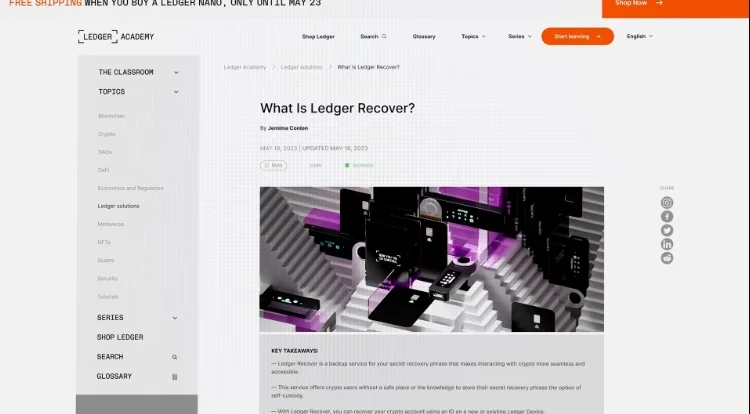
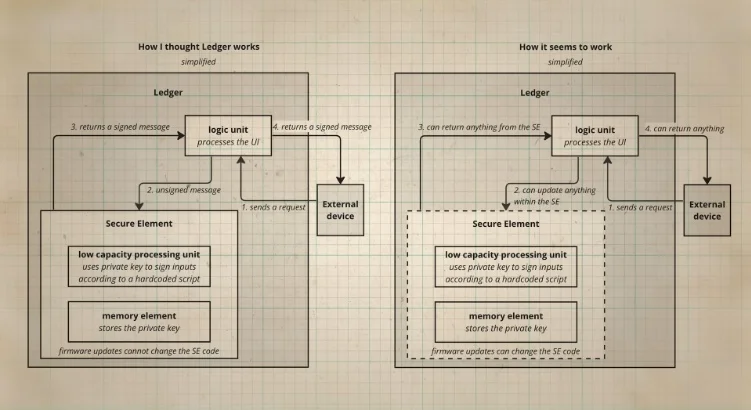
It's important to know that hardware wallets also receive firmware updates. These are like software upgrades for the device itself. While intended to add new features or improve security, these updates can affect how the secure element chip functions.
Firmware Update: A software upgrade for the internal operating system of a hardware device.
Another type of very secure hardware wallet is an air-gapped wallet. This kind of wallet is never connected to the internet or any computer, making it highly protected from online threats. It uses methods like QR codes to sign transactions.
Air-Gapped Wallet: A hardware wallet that is physically disconnected from all networks and computers, enhancing security.

Why Does a Hardware Wallet Matter?
Hardware wallets matter because they offer strong protection against online attacks, like hackers trying to steal your digital money from the internet. By keeping your private keys offline, they create a barrier that online threats cannot easily cross.
They allow you to practice self-custody, meaning you are in full control of your own digital money, rather than relying on a company to hold it for you. This avoids the risks associated with companies storing large amounts of customer information, such as data breaches.
Self-Custody: The practice of holding your own private keys and digital money, rather than trusting a third party.
Without hardware wallets, many people would have to trust online companies with their digital money, which can be risky if those companies experience security problems or leaks.
Key Terms You Should Know
Term | Plain-English Meaning |
|---|---|
Hardware Wallet | A physical device that stores your digital money's secret codes offline for security. |
Private Key | A secret code that proves you own your digital money. |
Cryptocurrency | Digital money that uses secure online technology. |
Seed Phrase | A sequence of 12 to 24 words that acts as a master key to recover access to your digital money. |
Ledger Recover | An optional service that splits a seed phrase into encrypted pieces for recovery using third-party providers. |
Shard | An encrypted piece or fragment of a seed phrase. |
Secure Element Chip | A small, highly protected computer chip inside a hardware wallet that stores sensitive information. |
Firmware Update | A software upgrade for the internal operating system of a hardware device. |
Air-Gapped Wallet | A hardware wallet that is physically disconnected from all networks and computers for maximum security. |
Open-Source | Software code that is publicly available for anyone to inspect and review. |
Closed-Source | Software code that is not publicly available and can only be accessed by the creators. |
Shamir Backup | A method of splitting a seed phrase into multiple unique parts for recovery without involving third parties. |
Self-Custody | The practice of holding your own private keys and digital money, rather than trusting a third party. |
Common Misconceptions
- Private keys can never leave the device: While designed to be secure, firmware updates can introduce changes that affect how the secure element chip operates, meaning private key data can potentially be accessed by the device's internal systems if programmed to do so.
- Hardware wallets are immune to all attacks: Some advanced attacks, like 'high voltage glitching,' can potentially affect certain hardware wallets but usually require physical access to the device and specialized tools.
- All hardware wallets offer the same level of transparency: Some wallets, like Trezor, use open-source code, meaning anyone can check how they work. Others, like Ledger, use closed-source code, meaning the inner workings are not publicly visible.
Open-Source: Software code that is publicly available for anyone to inspect and review.
Closed-Source: Software code that is not publicly available and can only be accessed by the creators.
Ledger vs. Trezor
Some hardware wallets are designed differently when it comes to how transparent their code is and how they handle backup options for your seed phrase.
For example, Trezor wallets use open-source code. This means that experts can publicly review the device's inner workings to check for hidden functions or security weaknesses.
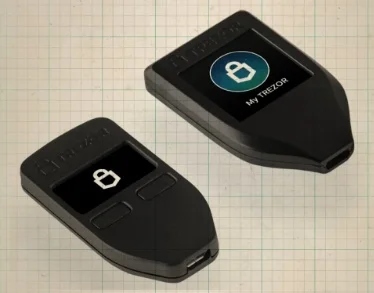
Trezor also offers a feature called Shamir Backup, which can create multiple parts of your seed phrase so you don't have to rely on a single backup or third-party companies.
Shamir Backup: A method of splitting a seed phrase into multiple unique parts, where a specific number of parts are needed to recover the original seed phrase, without involving third parties.
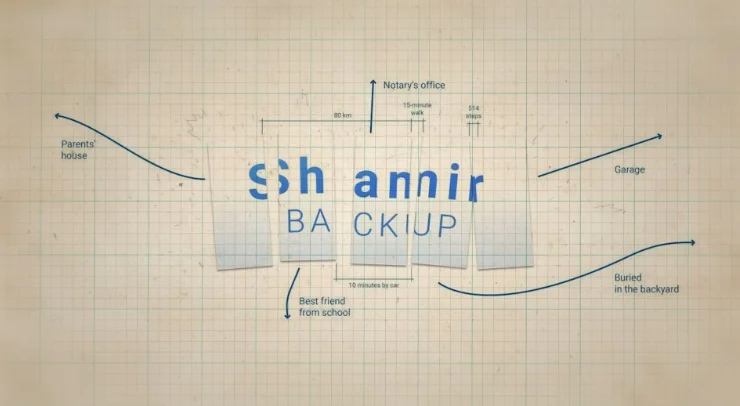
In contrast, Ledger devices have historically used closed-source code for their secure element chip, which means the public cannot easily inspect how it fully operates.
Ledger | Trezor | |
|---|---|---|
Code Transparency | Often closed-source | Open-source |
Seed Phrase Recovery | Ledger Recover (optional, uses third parties) | Shamir Backup (optional, no third parties) |
Frequently Asked Questions
Is a hardware wallet safe?
Hardware wallets are generally considered one of the safest ways to store cryptocurrency because they keep your private keys offline. However, no method is 100% foolproof. You still need to be careful with firmware updates and protect your device from physical theft or advanced technical attacks that require physical access.
Do I need a hardware wallet to use crypto?
No, you don't need a hardware wallet to use cryptocurrency. You can also keep digital money on online exchanges or other types of wallets. However, many people prefer hardware wallets for the enhanced security and control they offer by keeping your private keys offline.
How is a hardware wallet different from keeping crypto on an online exchange?
When you use a hardware wallet, you hold the private keys to your digital money (this is called self-custody). When you keep cryptocurrency on an online exchange, the exchange holds the private keys for you. This means you trust the exchange to keep your money safe, which can be risky if the exchange has security problems.
Can anyone use a hardware wallet?
Yes, anyone can use a hardware wallet. They are designed to be user-friendly, even for beginners. However, it's very important to understand how they work and to follow security best practices, like carefully managing your seed phrase and being cautious about firmware updates.
What is a seed phrase?
A seed phrase is a series of 12 to 24 common words that works as a master key. If you ever lose or break your hardware wallet, you can use this seed phrase to recover access to all your digital money on a new device. It's crucial to keep your seed phrase secret and stored in a very safe place offline.
What is Ledger Recover?
Ledger Recover is an optional service offered by Ledger that aims to make it easier to recover your cryptocurrency if you lose your seed phrase. It works by splitting your seed phrase into three encrypted pieces, or shards, and storing them with three different companies. If needed, you can recover your seed phrase by getting at least two of these shards back, though it requires verifying your identity.