If you've ever wondered where digital currencies like Bitcoin actually come from, you're not alone. Unlike traditional money printed by governments, new Bitcoins are brought into existence through a process called mining. This article will explain how this works in clear, simple terms.
Disclaimer: This article is for informational purposes only and does not constitute financial advice. Always conduct your own research before making any financial decision.
What Is Bitcoin Mining?
Bitcoin is a digital currency that many people around the world use. Instead of being printed by a central bank, new Bitcoins are created through a process called mining. Think of it like digging for a rare metal; there's a limited amount available, and it requires effort to find.
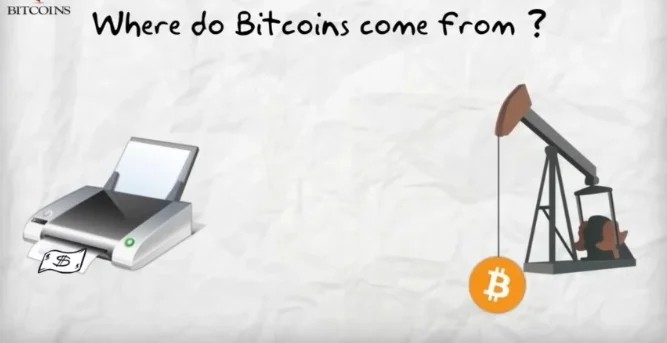
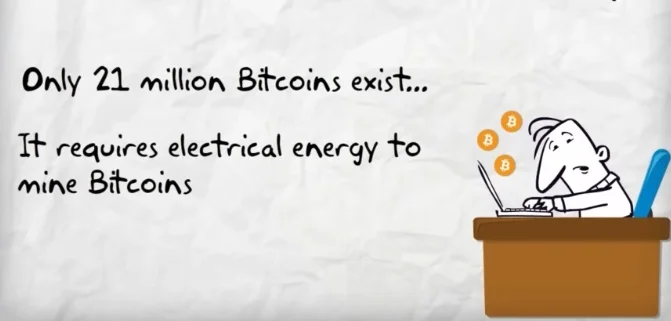
The total number of Bitcoins that can ever be created is fixed at 21 million. This scarcity is a core characteristic, similar to how precious metals have limited supplies. As we consider the effort required to secure these digital assets, we must look at the technical process that makes their creation possible.
A Bitcoin miner is essentially a person who uses a computer to help with this process. Their computer runs special software designed to perform specific tasks for the network.
How Does Bitcoin Mining Work?
Mining involves using powerful computers to solve very complex mathematical problems. This process requires a significant amount of electrical energy, similar to how a large factory consumes power.

Here’s a step-by-step look at how it works:
- Miners run special programs on their computers. These computers dedicate their processing power to solving challenging mathematical puzzles.
- When a miner's computer successfully solves one of these puzzles, it effectively creates a new block of transactions. This achievement is rewarded with newly generated Bitcoins.
- The difficulty of these mathematical problems constantly adjusts. This adjustment, known as mining difficulty, increases as more miners join the network. It's designed to keep the rate at which new Bitcoins are created consistent, no matter how many people are participating.
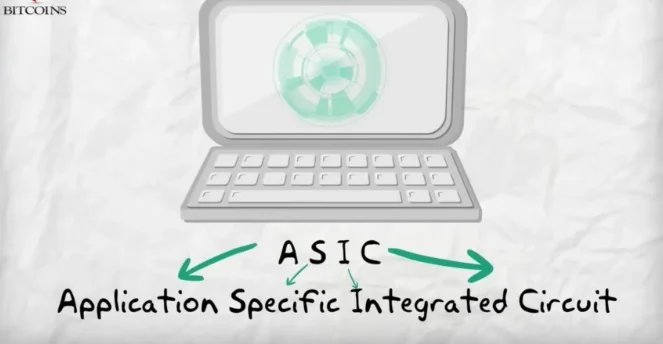
To keep up with the increasing mining difficulty, specialized computers called ASICs ( Application-Specific Integrated Circuits) were invented. These are super powerful computers designed specifically for Bitcoin mining.
Because it has become so difficult to mine alone, many miners join together in groups called mining pools. These mining pools combine their computing power to increase their chances of solving a puzzle and earning rewards, which are then split among the members based on their contribution.
Why Does Bitcoin Mining Matter?
Beyond creating new Bitcoins, miners play a crucial role in maintaining the Bitcoin network. They use their computers to verify transactions and prevent any attempts at fraud.
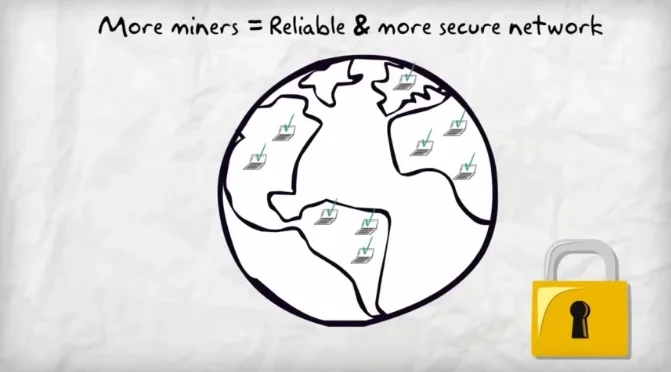
When more miners are active, the network benefits in two key ways: transactions can be verified faster, and the overall network becomes more secure. This collective effort ensures the integrity and reliability of Bitcoin. To fully grasp how these mechanics operate, it is helpful to familiarize yourself with the core vocabulary of the ecosystem.
Miners are compensated for their hard work. They receive small fees from the transactions they verify, and they also get newly generated Bitcoins when they successfully solve a mathematical problem.
Key Terms You Should Know
Term | Plain-English Meaning |
Bitcoin | A decentralized digital currency that operates without a central bank or single administrator. |
Mining | The process of using computer power to solve complex puzzles, verify transactions, and create new Bitcoins. |
Bitcoin Miner | An individual or entity that uses specialized computer hardware to perform Bitcoin mining. |
Mining Difficulty | An adjustable measure of how hard it is to find a new block for Bitcoin. It increases as more computing power joins the network. |
ASIC (Application-Specific Integrated Circuit) | A type of computer chip designed specifically for the purpose of mining cryptocurrencies like Bitcoin. |
Mining Pool | A collaboration of Bitcoin miners who combine their computational resources to increase their chances of solving a block and earning rewards. |
Common Misconceptions
- Misconception: Bitcoins are printed like traditional money.
- Correction: Bitcoins are not printed by a central authority. They are generated, or mined, through a computational process where computers solve complex mathematical problems.
- Misconception: Anyone can easily mine Bitcoin with a standard home computer today.
- Correction: Due to the significant increase in mining difficulty since Bitcoin's creation, it is now almost impossible to mine alone with a personal computer. Specialized hardware like ASICs and participation in mining pools are typically required to have a chance at earning rewards. Because these realities can be confusing, many people turn to the following common questions for clarity.
Frequently Asked Questions
Is Bitcoin mining safe?
From a network perspective, Bitcoin mining makes the network safer. The more miners there are, the more secure and resilient the network becomes against potential attacks or fraud. For individual miners, it involves running powerful computer hardware, which requires attention to electrical usage and cooling.
Do I need to be a miner to use Bitcoin?
No, you do not need to be a miner to use Bitcoin. You can acquire Bitcoin through various other means, such as buying it on an exchange, receiving it as payment, or using a Bitcoin ATM.
How is Bitcoin mining different from traditional gold mining?
Both Bitcoin mining and traditional gold mining involve extracting a finite resource and require effort. The key difference is the method of extraction: gold mining is a physical process, while Bitcoin mining is a computational process that uses specialized computers to solve mathematical puzzles.
Can anyone start Bitcoin mining?
While technically anyone can attempt to mine Bitcoin, it has become extremely challenging and often not cost-effective for individuals using standard computers. The high mining difficulty and the need for expensive, specialized ASIC hardware mean that most successful mining today occurs in mining pools or large-scale operations. As people seek alternative ways to participate in mining, they often encounter services that present significant risks.
Cloud Mining Risks
Think of cloud mining like renting a plot of land to farm, except you never see the land, the tools, or the harvest. In this arrangement, you pay a third-party company to use their mining hardware located in a remote data center. They promise to manage the technical setup and electricity costs, while you supposedly receive a portion of the Bitcoin generated by that equipment.
While the concept sounds convenient, it is important to approach these services with extreme caution. Most cloud mining operations are scams that promise unrealistic returns to unsuspecting individuals. These entities often present complex contracts that obscure the true cost of electricity and maintenance, which are frequently deducted from your potential earnings until the payout becomes nonexistent.
Before interacting with any third-party service, consider that mining is a hardware-intensive process that relies on razor-thin profit margins. When a company guarantees consistent profit or offers high-yield returns, it is often a red flag. Because the mining hardware is entirely under the control of the company, there is no way for you to verify if the machines are actually running or if they even exist. Engaging with these services often leads to a complete loss of the funds provided upfront.